Leveraging body-worn cameras in retail: a new layer of safety and security
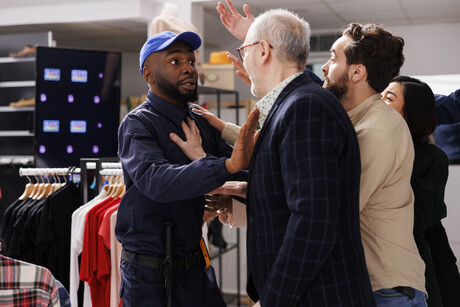
Body-worn cameras are not only a powerful tool for safety within retail settings, but can be viewed as a piece of a larger safety toolkit.
In recent years, retail stores have experienced a notable increase in theft and aggressive behaviour towards staff. Traditional security measures, such as CCTV systems, can make a difference but have shown limitations in directly preventing incidents due to their passive nature and distant positioning from potential perpetrators.
Across the globe, however, body-worn cameras (BWCs) have been shown to be an effective tool in a variety of contexts with respect to de-escalating situations and preventing aggressive behaviour. Law enforcement has been leveraging this technology for over a decade. For instance, a 2012 study showed officers in Rialto, California using BWCs were less likely to use force and experienced a significant drop in complaints. Multiple meta-analyses since then indicate that BWCs generally yield positive outcomes for police departments.
In an effort to continue evaluating the efficacy of BWCs in the retail environment, Adrian Beck recently ran a study with 16 participants.1 Below are the four main reasons that retailers are considering the use of body-worn cameras.
Four main reasons for investing in body-worn cameras
1. Body-worn cameras act as a highly visible tool for deterring perpetrators and de-escalating incidents
As highlighted by Beck, public self-awareness serves as one of the strongest cases for BWCs. In a retail context where BWCs are involved, both sides of the interaction are aware that a camera is capturing current behaviour. The data suggests this is likely to result in eased tensions because the proximity of the camera promotes greater accountability.
To support this point, one respondent in the study shared a specific incident.
“We had an example in [name of store] where a customer was trying to get a refund and began swearing at the staff. She then saw the camera and walked away,” the respondent reported. “A little later she returned to apologise, and staff had never seen this before and believe it was because of the camera. People don’t want to end up on TV and they think it played on her mind to the point where she came back and apologised.”
2. Body-worn cameras provide reassurance and support to employees
Beck’s study found that 66–80% of staff felt safer because of the introduction of BWCs. This has helped retailers feel more confident when it comes to intervening during suspicious situations.
One respondent explained it by saying “some [staff] said that when wearing the camera, they were more likely to intervene when they saw something suspicious and have greater confidence when dealing with an incident because they know their actions are being recorded and offenders cannot misconstrue what has occurred…”
3. Body-worn cameras gather sharable evidence on offenders and a record of what occurred
While participants in the study indicated that BWCs’ ability to serve as a proactive de-escalation tool is a compelling reason for deployment, this technology still has extreme benefit when de-escalation is not possible.
Retail staff will encounter different types of perpetrators; professional thieves or disruptive customers suffering from substance abuse or mental health issues are often undeterred by the notion of being recorded. Therefore, BWCs serve as an important evidence collection mechanism, and that evidence plays an important role in ongoing staff safety, police investigations and for prosecution.
4. Body-worn cameras positively influence the behaviour of those wearing the devices
While some respondents in the study noted this is more of a marginal benefit, others noted it did mediate the behaviour of wearers in a positive way, particularly those who are security staff.
One respondent in the study mentioned that: “What we have seen is that staff have admitted that it does change how they behave because they know they are on camera as well; it has moderated their behaviour.”
The key is to educate wearers on how footage can potentially be used as evidence; therefore, thorough training on appropriate behaviour when responding to an incident is critical.
Deployment of body-worn cameras
Overall, Beck’s study found that there is no one-size-fits-all approach to implementing this technology in a retail setting. Developing clear guidelines about when and where to use BWCs is beneficial for staff in order for them to be most effective. For example, staff must be aware that body-worn cameras won’t be used to monitor performance or be active in bathrooms and that adoption is solely in the interest of staff safety.
Ultimately, management must determine the best practices and policies to facilitate buy-in and drive better safety outcomes by utilising BWC technology. Respondents in the study provided insightful qualitative and quantitative data that suggests BWCs are not only a powerful tool within retail settings, but can be viewed as a piece of a larger safety ‘toolkit’ when leveraged in conjunction with CCTV, SOCs and other approaches.
1. Beck A 2024, Body Worn Cameras in Retailing: A Review of Use and Impact, Beck Research and Consultancy Ltd, <<https://www.axon.com/resources/body-worn-cameras-in-retailing>>
Modern station alerting reduces the toll on firefighters
A new generation of fire station alerting systems is improving communications reliability while...
Body cameras enhance safety at Dortmund Hospital
Following a rise in aggression towards healthcare workers, Dortmund Hospital equipped its...
After 600 days of Trump 2.0, how has telecom been impacted?
At 600 days, Donald Trump's second presidency has created a more interventionist environment...