5G drones deliver live images from emergencies
Every second counts for emergency services and rescue personnel in the event of a disaster, yet at the start of an operation, precise information about the situation on the ground is often scarce — especially in complex terrain or areas that are difficult to access.
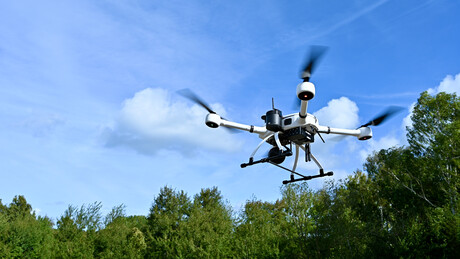
For this reason, Vodafone, Frequentis and the Rostock Fire Brigade — led by the German Aerospace Center (Deutsches Zentrum für Luft- und Raumfahrt, or DLR) — have joined forces through the ADELE project to improve conditions for emergency responders. They are now testing the deployment of automated drones immediately following an emergency call, with the idea that these drones can transmit high-resolution live images from the incident site directly to the emergency control centre even before rescuers arrive. Timely images allow emergency responders to gain an early impression of the situation and provide targeted assistance more effectively — saving valuable time when it matters most.
ADELE stands for ‘Automated Drone Deployment from the Control Centre’ (Automatisierter Drohneneinsatz aus der Leitstelle). As part of the project, Vodafone is providing 5G technology for real-time data transmission along with a new end-to-end encryption technology for maximum security. Frequentis is providing the connection to the control centre, and the Rostock Fire Brigade is testing the application in real-life operations (a complex exercise scenario took place near Rostock on 23 September 2025). The result of this collaboration is automatic planning of drone flights as soon as an emergency call is received.
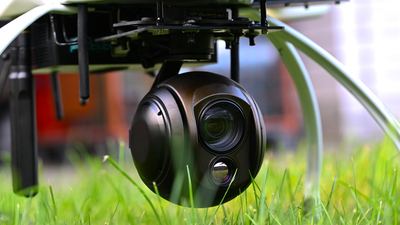
“Alongside coordinating the project, we are also responsible for the system architecture, providing the drone itself and contributing the tools for planning and executing flight routes,” said Andreas Volkert, ADELE project manager and uncrewed aerial vehicle expert at the DLR Institute of Flight Guidance. “Our rescue drone combines high-resolution camera sensors with optimised, low-risk flight control components based on real-time motion data. We ensure compliance with all legal regulations and full GDPR conformity to safeguard safety and data protection.”
DLR’s drone launches automatically towards the incident location and streams high-resolution video footage to the emergency services control centre in real time — before the first emergency vehicle has left the station. Via the 5G network, emergency personnel receive key information at a very early stage, including information about how a situation is developing, access routes, potentially hazardous material storage locations and the distribution of people in the affected area.
“With ADELE, we are bringing greater speed and clarity to the daily work of the police, fire brigade and other rescue services,” said Chris von Wrycz Rekowski, Senator for Finance, Digitalisation and Order for the Hanseatic and University City of Rostock. “The live images provide emergency responders with valuable information that not only offers a better overview but also saves valuable time. This allows for faster and better decision-making, and an even faster response.”
To ensure the seamless integration of drone flights, communications and control centre coordination, Frequentis and DLR are connecting drone control directly with the ASGARD and LifeX control centre systems — established communication systems used by the fire brigade and police respectively. The Automated Drone Dispatch System (ADD) is connected via a special interface; when an emergency call is received, the control centre software transmits the incident location, determined from emergency call data, to the ADD in the form of geocoordinates.
The ADD evaluates the geodata and suggests a possible drone deployment, with the operational planning team deciding whether a drone mission is appropriate. If the deployment is approved, the system automatically plans the optimal flight route and sends the rescue drone directly to the destination. To streamline the approval process, Vodafone has developed the DroNet Hub — a platform that gathers anonymous live data from mobile phones within a mobile radio cell, providing a realistic assessment of the actual ground risk.
Anke Kaysser-Pyzalla, DLR Executive Board Chair, concluded, “With the ADELE project, we are bringing modern drone technology directly into rescue operations. This will enable emergency services to reduce their response time to just a few minutes on average.
“Every second gained is valuable — to save lives in emergency situations, protect infrastructure, safeguard assets and to preserve the environment. We are delighted to contribute DLR’s extensive expertise in the field of uncrewed aerial systems to this endeavour.”
Modern station alerting reduces the toll on firefighters
A new generation of fire station alerting systems is improving communications reliability while...
Body cameras enhance safety at Dortmund Hospital
Following a rise in aggression towards healthcare workers, Dortmund Hospital equipped its...
After 600 days of Trump 2.0, how has telecom been impacted?
At 600 days, Donald Trump's second presidency has created a more interventionist environment...