Modern station alerting reduces the toll on firefighters
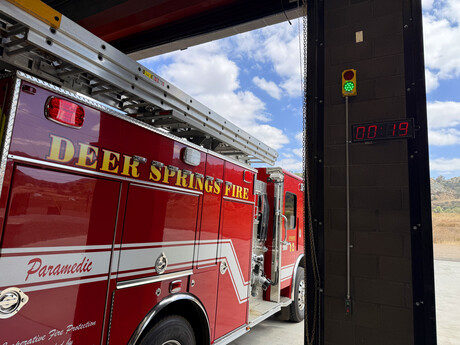
Firefighters spend their careers absorbing other people’s worst moments — medical crises, violent collisions, cardiac arrests and fires. Even when they remain calm and professional, the brain internalises what it sees. Over time, that exposure becomes trauma by proxy, a form of secondary trauma that accumulates quietly across years of service.
For fire chiefs, this concept is critically important because it reframes the station environment itself as a factor in firefighter wellness. If firefighters already carry the emotional residue of other people’s emergencies, then the station — their one place of rest — should not add unnecessary stress.
Yet legacy fire station alerting systems often do exactly that. Designed for speed rather than wellness, older systems rely on loud tones, harsh lighting and station-wide wake-ups. Although many of these systems continue to perform reliably for decades, they have also disrupted sleep cycles, elevated stress hormones and contributed to long‑term fatigue.
Battalion Chief Thomas Shoots of the Deer Springs Fire Protection District has witnessed that reality firsthand. “There is so much that our firefighters already have to absorb … the physical and mental strain,” he said. “We don’t need to add anything onto their plate.”
As District Chief, Shoots is responsible for the day-to-day fire and EMS operation in Deer Springs, California — including station readiness, response capability and coordination with partner agencies.
“Historically, fire station alerting systems in the past were very loud,” Shoots said. “The whole idea was to get everyone’s attention and after decades of that, it takes a toll. There are other ways to get attention without just being loud.”
Now a new generation of fire station alerting systems is improving communications reliability while adding capabilities such as selective alerting, text-to-voice announcements, redundant communications paths, and highly configurable station notifications.
For many fire and emergency service agencies, those capabilities are improving operational performance by helping reduce response times while also creating a less stressful station environment.
“Having a modern system allows us to be more thoughtful and targeted with how we are doing dispatches,” Shoots said. “That’s a huge thing when we are looking at the health and wellness of our crews and trying to ensure they get as much rest and sleep as possible.”
A rebuild creates an opportunity
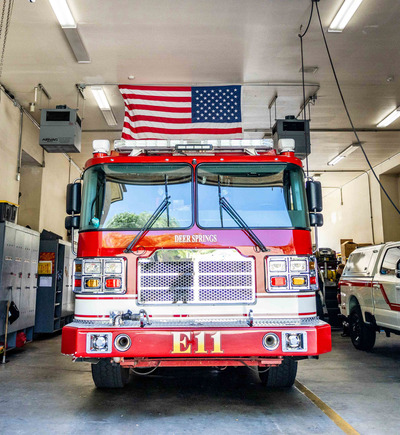
When Deer Springs rebuilt Station 2, fire leadership saw a chance to rethink how firefighters are alerted — not just how fast.
One of three stations in the district, Station 2 is a busy rescue station with an urban search-and-rescue vehicle and a swiftwater rescue team that can grow in size during elevated weather risks. Its crews rotate through different rooms depending on staffing and overtime assignments. The calls can vary widely, and the operational tempo is unpredictable. In short, it is exactly the kind of station where legacy, one‑size‑fits‑all alerting causes unnecessary disruption.
Several years earlier, the district had upgraded its other stations to a modern fire station alerting (FSA) system from RadioMobile, a company that provides life-saving technology solutions for the fire service. Shoots had seen it in action at partner agency San Diego County Fire. “We knew the system had been vetted and that it worked well,” he said.
RadioMobile’s IQ Fire Station Alerting System is designed to help agencies move beyond legacy alerting by converting CAD dispatch data into immediate station actions such as tones, lighting changes, message displays and dispatch voice.
“The alerting system is really meant to make responding to calls as efficient and effective as possible,” Shoots said. “Ultimately, our goal is to get out the door as quickly and safely as possible and get to where people need us.”
A calmer start to a high-stress call
The RadioMobile FSA system is activated automatically upon receipt of a dispatch message. When an emergency call is processed and dispatched, the information is sent to the station over an IP network or, in some cases, over radio. In an IP-based system, the message is forwarded to the command desk terminal, which extracts the information needed to alert the right personnel, activate the appropriate station devices, and send the information to firefighters.
The station control unit receives the instructions and activates lights, speakers, timers, remote displays and other devices throughout the fire station. It also manages inputs from acknowledgement buttons, doorbells and emergency buttons located throughout the station.
Automated messaging ensures both higher consistency of messages and accuracy because the digital message can be converted into text-to-speech, which results in all stations hearing the same voice, cadence and delivery on each call. This reduces variability from live dispatcher audio such as fatigue, accent, time of shift and clarity of speech.
“In the past, we had a dispatcher reading out call information, and every dispatcher is going to be different. The signal wasn’t always the best and it wasn’t always clear,” Shoots explained. “Now, when the digital voice comes over, you know exactly what it is going to sound like. It is very clear, easy to understand, and there is no interference.”
Another key capability is selective, or zone-based, alerting. Instead of waking the entire station for every call, the system can alert the rooms and crew areas tied to the units assigned to the incident. That flexibility allows a one-engine station, for example, to be handled very differently from a larger station with multiple companies, specialty units, rotating rooms or overtime crew assignments.
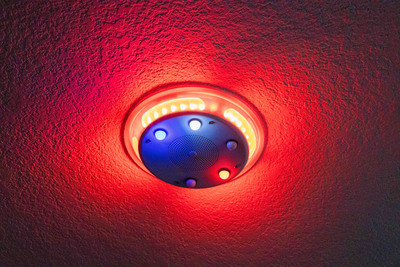
RadioMobile’s system includes features designed to reduce unnecessary stress for firefighters, particularly when they are at rest or sleeping. Rather than suddenly shocking the entire station awake, selective alerting allows only the rooms tied to the assigned unit to receive tones.
Zone selector panels let crews identify which unit is assigned to a room for that shift. Tones ramp up gradually instead of blasting awake a sleeping station. Visual indicators — such as red for engines, yellow for aerial appliances, blue for paramedics and green for bushfire appliances — provide instant clarity.
For a recent wildland fire, Shoots recalls hearing the tones begin, then looking up immediately to see a white light indicating that as Battalion Chief he was expected to respond before the audio message was even delivered. He was instantly on the move.
Because the alerts are consistent, he said, “your mind knows exactly what’s happening when you have a call, but it’s not to the point where it gets your heart racing.” For fire chiefs, this is the intersection of wellness and operational readiness — better rest means better decision‑making, and better decision‑making means safer responses.
“There are already enough unknowns when we show up to a call,” Shoots said. “Obviously every call is different, but having the basics coming straight from the CAD system is really significant for us and makes everything seem more controlled and less chaotic when we are leaving the station and heading to the incident.”
Turnout time: the operational payoff
Turnout speed is another benefit. Older, radio-based station alerting methods can take a minute or more to deliver an alert into the station. RadioMobile’s network-based approach can reduce that delay to less than a second. When emergency response is measured in seconds, eliminating a minute of delay can materially improve turnout time.
“Getting us out the door and over to help people is really important,” Shoots said. “We are a little less urban in our area as well, which means it does take longer to get to some of these locations. What we don’t want is any kind of added delay getting out the door.”
Turnout timers installed in appliance bays help crews track their performance in real time. Dispatch information delivered simultaneously to the station and responding vehicles improves continuity and accountability.
Protecting the protectors
When construction on Station 2 finished ahead of schedule, Deer Springs leadership was eager to get the alerting system installed immediately.
“We contacted RadioMobile to see how quickly they could complete the alerting system, and they responded immediately,” Shoots said. “We are very pleased with how everything has worked so far.”
Harsh lighting, blaring speakers and abrupt tones may have met the needs of an earlier era, but they also introduce unnecessary disruptions in today’s stations. Modern alerting is not about bells and whistles; it is about protecting firefighters’ sleep, reducing unnecessary stress, and acknowledging the emotional weight of everyday trauma by proxy.
“We want our people to be able to have a nice long career and be able to make it to retirement,” Shoots said. “Anything we can do to help on that front is huge.”
Codan VaaN 2.0 firefighter-assured communications concept
Codan's Vehicle as a Node 2.0 (VaaN 2.0) concept transforms frontline appliances into...
m-View Matrix body-worn cameras
m-View's Matrix body-worn cameras are purpose-built for frontline environments, offering...
Airbus Agnet Direct multimode connectivity for MCX users
Agnet Direct is a multimode solution that allows mission-critical applications (MCX) users, such...