AusAlert testing to occur in June and July
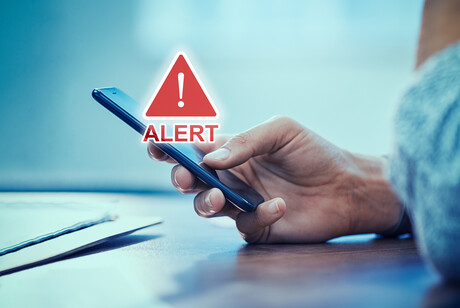
The federal government has announced that its new national emergency warning system, AusAlert, will begin testing in June and July.
AusAlert will bring cell-broadcast technology to Australian emergency warnings. According to the national Emergency Management Agency (NEMA), the technology is considered international best practice and is used by more than 30 countries for emergency warning communications.
The AusAlert system will send urgent messages to compatible mobile phones and other mobile devices in a specified area.
The system will allow emergency services organisations and some Australian Government agencies to send targeted warning messages. The system will be more reliable, accurate and efficient than current systems. This means authorities can reach people quickly when it matters most, keeping Australians informed and helping to save lives and property. In the future, AusAlert will also send automated voice messages to landline phones.
An AusAlert message will tell inform people of:
- what the emergency is
- where it is happening
- how serious it is
- what the person should do
- who the message is from
- where to find more information.
AusAlert may be used for a range of situations, including:
- natural hazards, such as bushfires, floods, cyclones and tsunamis
- public safety and security threats, such as serious public safety incidents or terrorism
- biosecurity incidents, such as animal or plant disease and biohazard outbreaks
- health emergencies, such as pandemics or other national public health events.
AusAlert uses cell-broadcast technology, which is more efficient than current SMS-based emergency alerts. It is also safer, faster and more secure.
Once active, AusAlert will have the following benefits:
-
Targeted alerts: Alerts are sent only to mobile devices in a specified area. This can include areas that cross state and territory borders. Messages can be targeted to areas within 160 metres, such as a single building. This allows emergency services organisations to send precise evacuation messages. Those not in the affected disaster area will not receive the alert.
-
Fast: Everyone in the targeted area is sent the alert at the same time. This means alerts can reach millions of mobile devices almost instantly.
-
Reliable: AusAlert messages are not text messages (SMS). Because they use cell-broadcast technology, alerts can still be sent and received when mobile networks are busy. Devices do not need an active SIM card to receive an alert.
-
Private and secure: Only authorised emergency services organisations and Australian Government agencies can send alerts.
-
Loud and clear: During the most serious emergencies, AusAlert uses a loud warning sound and vibration. The alert will make this sound even if your phone is on silent or ‘do not disturb’.
- Proven technology: Cell broadcast is widely used for public warning systems in other countries, including the United States, United Kingdom, Canada, New Zealand, Japan and the European Union. It is a fast, location-based way to reach mobile devices during emergencies.
Delivering AusAlert
AusAlert is currently being built, and NEMA has contracts in place for AusAlert to begin operating from October 2026. From then, the Australian Government and state and territory emergency services organisations will be able to send alerts, subject to individual state and territory agreements.
As part of early testing, during June 2026, some communities will receive a clearly labelled test message from AusAlert. The communities that will be involved in testing are:
- Majura, Australian Capital Territory (micro test at Emergency Services Agency headquarters)
- Launceston, Tasmania
- Port Douglas, Queensland
- Liverpool, New South Wales
- Tennant Creek, Northern Territory
- Geelong, Victoria
- Goomalling, Western Australia
- Port Lincoln, South Australia
- Queanbeyan area, Australian Capital Territory and New South Wales (cross-border test)
After community testing, there will be a national test on Monday, 27 July 2026 at 2 pm AEST. During this test, all compatible devices across Australia will receive a test alert. This helps ensure the system works as expected before it is used in real emergencies.
July's Telstra outage cost Australia $500m, modelling shows
A single Telstra outage in July cost the Australian economy over half a billion dollars,...
Voice console tech delivered for NZ's new LMR network
Zetron has been recognised for its delivery of a voice console solution for New Zealand's...
Laws passed to expand mobile coverage, protect consumers
The Australian Government has passed legislation designed to expand basic mobile coverage across...