New Zealand public safety network rollout makes good progress
Tait Systems NZ, a subsidiary of Tait Communications, has published an update on the new Land Mobile Radio (LMR) network being rolled out across New Zealand.
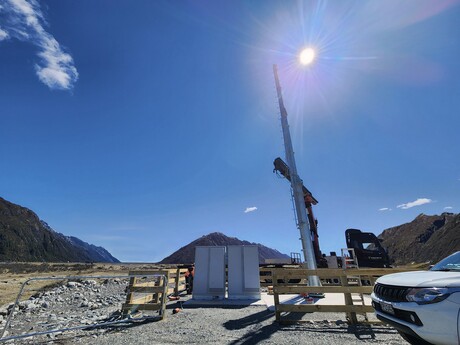
A massive landowner outreach and construction effort has seen transmission towers appear all over the country for the new digital, encrypted national radio network that will deliver a more secure, reliable and resilient radio service for police, fire and ambulance.
The new LMR network is being delivered as part of the NZ$1.4 billion Public Safety Network by government entity Next Generation Critical Communications (NGCC) — working on behalf of Police, Fire and Emergency NZ, Wellington Free Ambulance and Hato Hone St John.
The Public Safety Network’s LMR network will support around 30,000 emergency services personnel and the communities they serve. For the first time, the four emergency service agencies will share the same radio network, making it easier to communicate and work together for everyday public safety, and crucially, on large scale events like natural disasters.
Tait Systems has acquired more than half (271) of the 500 sites required, has built 93 sites that are now ready for testing, and a further 72 sites are under construction.
Once tested, each region will be handed over to the emergency services throughout 2026 and 2027 to begin their final testing and progressive transition to using the new radio network in each region.
All radio transmission sites are built for Wellington, while Canterbury requires only two more sites to be built, and Auckland is on track for the first quarter of 2026. These three areas cover 60% of New Zealand’s population.
Work on the radio transmission sites to cover the rest of New Zealand is underway in the eight remaining LMR network regions.
“NGCC, Tait Systems NZ and the emergency services are entering a six-month period of extensive testing on a fully-functioning scale LMR network environment in Canterbury,” said NGCC Director Steve Ferguson. “This includes using emergency services operational scenarios to test technology, coverage, resilience, inter-agency communication, and all associated systems, processes and change management approaches.
“The rigour behind this phase reflects the mission-critical nature of the network as well as the need for emergency services to be able to move quickly and smoothly from the old network to the new when the time comes.”
Tait Communications is well underway with the manufacture and installation of more than 22,000 (radio) terminals for emergency services vehicles, stations and buildings, and personnel who are needed to use the new radio network. PSN Cellular Services are already in use by 25,000 frontline responders.
In addition to the LMR network, the Public Safety Network has already put world-leading new cellular services into the hands of more than 25,000 emergency responders. This means their mobile phones, tablets and other emergency equipment can use both the Spark and One NZ networks, and they get priority access to cellular networks ahead of the public when there is network congestion and degradation as in a major emergency or crowd event.
July's Telstra outage cost Australia $500m, modelling shows
A single Telstra outage in July cost the Australian economy over half a billion dollars,...
Voice console tech delivered for NZ's new LMR network
Zetron has been recognised for its delivery of a voice console solution for New Zealand's...
Laws passed to expand mobile coverage, protect consumers
The Australian Government has passed legislation designed to expand basic mobile coverage across...