NZ extends PSN Cellular Services, progresses on LMR network
Hundreds of public safety and emergency management organisations across New Zealand will soon have access to the emergency-grade Public Safety Network (PSN) Cellular Services already being used by 25,000 frontline responders to increase communications coverage and reliability.
Since 2023, government entity Next Generation Critical Communications (NGCC) has been rolling out its ‘best in breed’ cellular services to emergency responders in Police, Hato Hone St John, Wellington Free Ambulance, and Fire and Emergency New Zealand as part of the NZ$1.4bn PSN. NGCC will extend its PSN services to eligible organisations from mid-2026 as a new limited liability company listed in Schedule 4A of the Public Finance Act 1989.
NGCC Director Steve Ferguson said the government’s decision to increase the organisation’s mandate is good news for the sector, with benefits flowing on to community safety and New Zealand’s socio-economic wellbeing.
“As we saw in Cyclones Gabrielle and Tam, there is a very wide network of central and local government, not-for-profit, and infrastructure and utilities organisations who activate in emergencies, often working alongside the emergency services,” Ferguson said. “They all need to use their mobile phones and other tools to get good information to do their jobs, coordinate with each other and stay safe. We can now help them with that.”
The PSN Cellular Services — developed through Hourua (a Spark and One NZ joint venture) — include PSN-enabled mobile phones, tablets and other emergency equipment roaming across both Spark and One NZ networks to extend coverage and provide a backup network if one is down. PSN-enabled cellular devices also get priority access to coverage ahead of the public when there is network congestion and degradation, as can happen in large emergencies. The PSN’s cellular network visibility tool means the emergency teams coordinating responses and operations can see in real time whether there are cellular coverage outages at a location.
“We know continuous communication is vital for organisations responding to emergencies,” Ferguson said. “PSN Cellular Services will help ensure they can get the right information when and where they need it to make good decisions for people in need.
The news follows good progress on delivering the PSN’s Land Mobile Radio (LMR) network, which is set to support around 30,000 emergency services personnel and the communities they serve. For the first time, the four emergency service agencies will share the same radio network, making it easier to communicate and work together for everyday public safety and on large-scale events like natural disasters.
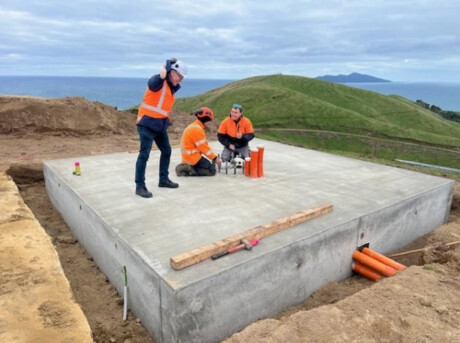
The LMR network’s vendor, Tait Systems New Zealand (a wholly owned subsidiary of Tait Communications), has acquired more than half of the 500 sites required for the network, with 93 sites now ready for testing and a further 72 sites under construction. All radio transmission sites have been built for Wellington, Canterbury requires only two more sites to be built, and Auckland is on track for the first quarter of 2026. Work on sites to cover the rest of New Zealand is underway in the eight remaining LMR network regions.
Once tested, each region will be handed over to the emergency services throughout 2026 and 2027 to begin their final testing and progressive transition to using the new radio network in each region. Tait Communications is also well underway with the manufacture and installation of more than 22,000 radio terminals for emergency services vehicles, stations and buildings, and personnel that are needed to use the new radio network.
“NGCC, Tait Systems NZ and the emergency services are entering a six-month period of extensive testing on a fully-functioning scale LMR network environment in Canterbury,” Ferguson said. “This includes using emergency services operational scenarios to test technology, coverage, resilience, inter-agency communication, and all associated systems, processes and change management approaches.
“This phase is about making sure that when our emergency responders push the button on their radios using the new network, it works every time.”
Temporary Disaster Roaming ready for high-risk weather season
Australia's mobile network operators are ready to activate Temporary Disaster Roaming in...
Telcos have improved Triple Zero reliability, ATA argues
The Australian Telecommunications Alliance claims telcos have spent the past 12 months working...
Senate inquiry recommends nationalising Triple Zero functions
The Senate's Environment and Communications References Committee has produced a report with...