
Connectivity resilience emerges as a defining priority for government agencies
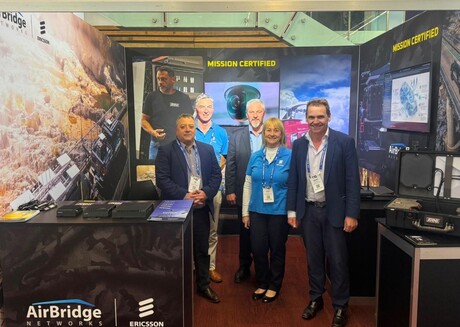
Conversations with emergency services, government agencies and critical infrastructure operators at the recent Technology in Government event in Canberra reinforced a clear shift in how public sector organisations are thinking about connectivity.
The focus is no longer simply on bandwidth, coverage or the next network upgrade. Increasingly, the discussion is about operational resilience, continuity of service, cyber security, data sovereignty and the ability to maintain communications when communities need them most.
Across discussions held during the event — which brought together public sector leaders and technology providers around themes including cyber security, service delivery, critical infrastructure and data analytics — one conclusion stood out: government and emergency response organisations are seeking communications architectures that are more flexible, rapidly deployable and able to operate independently of fixed infrastructure when required. Whether the scenario is a bushfire response, a flood event, a major public gathering or a remote infrastructure project, agencies are looking for ways to take connectivity to the incident rather than rely solely on what is already in place.
Traditional models are being tested
A consistent theme from the conversations in Canberra was that traditional communications models are no longer sufficient on their own. Agencies are operating in more demanding environments, with networks expected to support not just voice communications but video, telemetry, operational applications, and situational awareness systems from virtually anywhere.
Emergency services need connectivity at disaster scenes. Utilities need reliable links in remote and difficult terrain. Local councils need temporary communications for community events, infrastructure works, and field operations. At the same time, agencies are planning for situations where fixed infrastructure is unavailable, overloaded or damaged.
The result is a more pragmatic conversation about resilience. Organisations are not necessarily looking for a single technology to solve every problem; they are looking for architectures that can adapt to the operating environment, maintain service continuity and meet government expectations around security, procurement, and trusted supply chains.
Practicality is driving technology decisions
The requirements raised by agencies and emergency services were notably practical.
Several requirements came up repeatedly in discussions:
- Communications availability and uptime.
- Power efficiency and battery operation.
- Signal propagation and coverage in difficult terrain.
- Integration with existing networks and security frameworks.
- Compliance with government procurement requirements.
- Onshore support and service level agreements.
- The ability to rapidly establish communications in remote or hard-to-reach locations.
These are not theoretical requirements. They are operational needs that can directly affect an organisation’s ability to protect communities, maintain essential services and coordinate response activities during disruptive events.
Connectivity needs to move with the mission
One of the clearest conclusions from the event was that portable and vehicle-based communications are becoming more important to public sector operations. Rather than waiting for connectivity to be restored or extended, agencies want the ability to establish communications wherever the mission takes them.
That could mean a vehicle responding to an emergency incident, a trailer deployed into a disaster zone, a temporary command post established near a major event or a work crew operating at a remote critical infrastructure site. In each case, connectivity needs to be treated as part of the operational toolkit, not simply as a fixed network service.
This is where ruggedised, rapidly deployable connectivity platforms have an important role.
Australian-designed AirBridge Rapid Network Infrastructure (ARNI) solutions from AirBridge Networks (www.arni.net.au), combined with enterprise wireless and private network connectivity from Ericsson Enterprise Wireless Solutions, provide organisations with a flexible architecture that combines multiple access technologies in a single managed solution, while ensuring integration with existing government environments, security frameworks, and operational workflows. Designed for tactical, mobile, and rapidly deployable operations, ARNI enables resilient communications through a combination of 5G, LEO satellite, Wi-Fi, and SD-WAN technologies, ensuring connectivity can move with the mission whenever and wherever it is required.

Hybrid networks are becoming the preferred approach
Another important conversation we had in Canberra was talking to agencies about how different connectivity technologies can be complementary rather than competing. Cellular, private 5G, satellite, Wi-Fi and existing radio systems each have strengths, but no single network technology is ideal for every environment.
A resilient communications strategy is therefore likely to be multi-layered. It should be capable of using the best available connection at any given time, shifting between access technologies as conditions change and maintaining service continuity when one path is degraded or unavailable.
For government organisations, the benefit is clear: improved availability, greater flexibility and reduced risk of communications loss during critical operations. In a public safety context, continuity of communications can directly influence operational effectiveness, situational awareness, and community outcomes.
Trusted supply chains and local support matter
The conversations also made clear that technical capability is only part of the decision-making process. Government agencies are placing greater emphasis on data sovereignty, cyber resilience, trusted suppliers, and local support.
This is particularly important for emergency services and critical infrastructure environments, where solutions must meet procurement requirements, integrate into existing security frameworks and be supported by teams that understand Australian operational conditions.
As an Australian company, AirBridge brings local engineering and integration expertise to this challenge, while Ericsson contributes enterprise wireless, private 5G, SD-WAN and cloud management capabilities. Together, the partnership reflects the direction many agencies appear to be moving towards: flexible architectures that combine multiple wireless connectivity technologies in a secure, manageable, and locally supported model.
The conclusion: resilience must be designed in
If there was one conclusion to draw from the discussions at Technology in Government, it is that communications resilience can no longer be treated as an add-on. It needs to be designed into public sector operations from the outset.
For emergency services, government agencies and critical infrastructure operators, the ability to stay connected in unpredictable environments is becoming central to service delivery and public safety. Solutions that are ruggedised, rapidly deployable, secure, and able to combine multiple network connectivity paths will be increasingly important as organisations prepare for more complex operating conditions.
The message from Canberra was pragmatic rather than theoretical: governments and emergency response teams need communications that work when conventional infrastructure is constrained, unavailable or under pressure. The organisations that plan for that reality now will be better placed to respond when it matters most.
An effective PSMB network needs cross-domain experience
Exclusive interview with Elyssa Rollinson, CCO, BAI Communications
When Seconds Count: Advancing Fire & Rescue Communications for Safer Emergency Response
From the first alarm to the final extinguished flame, communication determines whether responders...
Optimizing Emergency Response Requires Purpose-Built, Standards-Based Call Management
With standards-based, interoperable call management solutions, Emergency Service Organisations...