Comms Connect preview: what AI adds after the duress button is pressed
At Comms Connect Melbourne, Zetifi CEO Dan Winson will be presenting on the topic ‘Building for Agents, Not Chatbots’, which will explore how agentic AI is changing workflows, risk management and product development. And when it comes to duress systems, an optimised workflow can quite literally mean the difference between life and death, as outlined in the article below.
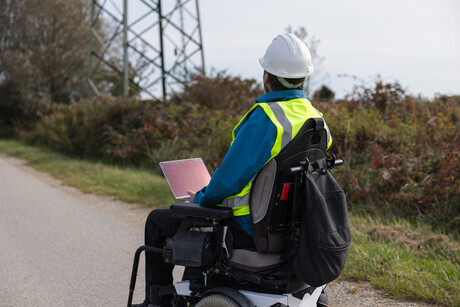
For industries built on distributed teams — mining, agriculture, utilities, transport, telecommunications and local government — the goal is simple: everyone gets home safe. Technology has made raising the duress signal straightforward now — cellular networks, apps and wearables have made it easy for a worker to flag a problem.
What’s harder, and what connectivity gaps and process breakdowns can still get in the way of, is guaranteeing that signal reaches someone who acts on it, promptly and without doubt. Vehicle incidents account for roughly 42% of Australian workplace fatalities1, a reminder of how much rides on that handoff between alert and action.
That handoff depends on connectivity holding up, and coverage gaps aren’t only a bush highway problem. A technician in a city basement can lose a signal or have a dead battery just as someone hours from the nearest town, which is why a resilient approach treats cellular as one layer among several, backed by smart antennas, UHF radio or satellite. A worker who can’t get a call out is in a fundamentally different situation to one who can.
That principle is live today through a joint project between Zetifi and Telstra Field Services, whose technicians often work in genuinely isolated conditions while helping deliver universal service obligations across regional and remote Australia. Because a duress signal there can’t depend on a single network, the two companies built a system where the signal travels over more than one path at once — cellular, satellite or UHF radio — and lands directly inside the systems Telstra’s own operations team already uses to manage safety, not a separate console someone has to remember to check. It’s built for the worst case, not the average one.
This is where AI is starting to change the equation, not by replacing the phone call or the duress button, but by closing the loop after it’s pressed. A workflow tuned to a company’s own rules can route a signal straight to a named responder, confirm it was received, and escalate automatically if no one acknowledges it in time, rather than leaving it to sit in a shared inbox. For a lone worker, the value isn’t only a faster response. It’s the assurance that someone, not just something, has been told, and that the outcome will be confirmed rather than assumed. That matters because isolation is a recognised driver of poor mental health, which costs the Australian economy an estimated $220 billion a year2 and remains the leading cause of workplace absence. Knowing help is genuinely on the way, not just that a message went out, is what turns a piece of technology into something a worker can actually rely on.
It’s also where Dan Winson, founder and CEO of Zetifi, will pick up the thread at Comms Connect Melbourne this October. His presentation ‘Building for Agents, Not Chatbots’ looks at how what the industry calls agentic AI — systems that can read a policy, decide, and act — is moving into decision chains that used to be entirely human, including safety-critical ones like this. It’s already showing up in lone worker deployments where an agent reads an organisation’s own escalation policy and acts on it directly, trading the unpredictability of a person watching a screen for a new class of failure that has to be engineered for in advance and explained to a regulator after the fact.
Winson puts the wider shift this way: “The question is no longer whether AI works, it’s whether your data does. An agent is only as good as what it can reach and how well it reflects the way your business actually operates.” Increasingly, he argues, that logic is being programmed in-house by the fleet controller or the service lead, not a developer, because they’re the ones who know what should be escalated and what shouldn’t.
For operators managing people and vehicles across Australia, the fundamentals haven’t changed: get people connected, know where they are, and know someone will answer. What’s changing is who builds that certainty.
1. Safe Work Australia, ‘Behind the numbers: what’s causing harm at work’, 2025.
2. Productivity Commission, Mental Health Inquiry Report, 2020; as reported by ABC News, ‘Mental illness costs economy $220 billion a year, report finds’, 16 November 2020.
Three months offline: the identity test facing critical infrastructure
The Australian Signals Directorate's CI Fortify guidance puts prolonged isolation at the...
Multisite DMR system strengthens comms for mining group
Caltta Technologies has announced the successful deployment of a multisite DMR Enhanced...
Private network upgrade for industrial campus
Inrico delivered an end-to-end converged communication solution to support Yihai Kerry's...