
Large Area Wi-Fi validated with real-world deployment
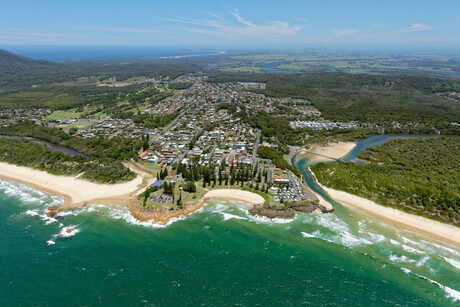
Pivotel, in partnership with the Connectivity Innovation Network (CIN), recently deployed a novel Large Area Wi-Fi Solution (LAWIFI) at the NSW Surf Life Saving Country Championships in South West Rocks NSW, delivering a single, secure, wide-area wireless network to support safety-critical operations, event systems and media communications across the beach precinct.
This system is currently in the final stages of development, supported by the Telecommunications Disaster Resilience Innovation Grant (TDRI), and builds on the earlier success of the CIN’s Rapidly Deployable Large Area Wi-Fi project delivered by the University of Technology Sydney, the University of Sydney and Pivotel. Key advances include a fully integrated, all-in-one rapidly deployable LAWIFI system, featuring a more compact 360-degree antenna and an upgraded access point combined with a ruggedised, flexible Pivotel backhaul solution.
The Championships involved more than 1100 competitors, supported by officials, safety teams and event staff across multiple surf and beach events over the course of the weekend. This temporary surge in population placed significant pressure on terrestrial mobile networks in the small regional township, which are typically engineered for everyday community usage rather than large, short-duration events. To maintain reliable communications during peak periods, LAWIFI was deployed to provide consistent, high-availability connectivity across the entire beach footprint.
For the Championships, LAWIFI aimed to deliver a secure, wide-area Wi-Fi network spanning approximately 1.5 km of beachfront, from the dunes to the waterline, providing continuous, high-performance coverage from a single, centrally managed deployment in a challenging coastal environment. The architecture integrated resilient satellite backhaul with cellular failover to maintain consistent performance during periods of local network congestion.
The network supported all core operational systems on a single platform, including event operations, safety services, RFID scanning and competitor tracking, broadcast systems, media communications and event technology platforms. This unified approach removed the need for the patchwork of temporary connections, mobile hotspots and mesh systems that have, at past events, resulted in coverage gaps, inconsistent performance and significant operational complexity.
This enabled event officials to manage safety oversight and event operations across the entire beach precinct using one operational network, improving situational awareness, response times and overall operational efficiency. The deployment also supported the use of four UAVs to provide real-time aerial visibility across the surrounding waters and competition zones, strengthening on-water safety and operational coordination, including targeted monitoring in response to recent shark activity along Australia’s east coast.
The event provided an opportunity to validate the performance of the new LAWIFI system in a demanding, real-world operational environment. The deployment delivered continuous coverage across a 2.2 km coastal footprint, supporting more than 100 concurrent users, while achieving sustained throughput in excess of 100 Mbps at distances of up to one kilometre from the primary access point.
In comparative testing, this performance significantly exceeded that of conventional off-the-shelf Wi-Fi, cellular and temporary event networking solutions, which typically experience rapid signal degradation, capacity constraints and inconsistent reliability over similar distances and user loads. The results demonstrated LAWIFI’s ability to deliver carrier-grade, wide-area wireless connectivity at scale, under live operational conditions and peak demand.
By extending enterprise-grade connectivity into a challenging coastal setting, the deployment demonstrated how modern digital infrastructure can enhance major events while directly supporting safety, efficiency and operational resilience.
“Operating the Championships on a single, secure network across the entire beach made a significant difference to how we managed safety, event operations and technology systems,” said Matthew Ingersole, Chief Information Officer, Surf Life Saving NSW. “LAWIFI supported RFID tracking, broadcast and media communications, giving our teams greater visibility, situational awareness and confidence throughout the event.”
“Surf Life Saving NSW operates in some of the most demanding environments for communications. Delivering reliable Large Area Wi-Fi across a complex coastal footprint, under high operational load and peak demand, demonstrates how this capability can support safety-critical operations, major events and regional communities,” said Darren Cooley, Head of Enterprise & Government, Pivotel. “As a result of our TDRI development, the consortium has delivered an innovative, resilient and deployable connectivity solution delivering real-world outcomes at scale.”
“The deployment at South West Rocks demonstrated how collaborative research can be translated into a working, wide-area communications capability for a live, safety-critical event,” said Genie Tan, Chief Operating Officer, Connectivity Innovation Network (CIN). “It reflects CIN’s role in bringing together industry, academia and government to apply innovative connectivity solutions in real operational environments.”
Further information on the rapidly deployable Large Area Wi-Fi Solution is available at: https://www.connectivityinnovationnetwork.com/lawifi/.
Phone: 07 5630 3000
Cable Ways Silver Star configurable outdoor cabinets
Silver Star outdoor equipment cabinets are designed to provide a standardised yet highly...
Getac UX10 and UX10-IP tablets
Getac has launched the UX10 and UX10-IP tablets, designed to provide versatile, fully rugged...
Roxtec CSP multi-cable cabinet seal platform
Roxtec CSP multi-cable transits are designed to be area efficient, adaptable to cables of...