Telecom Research Institute to strengthen Aust telco networks
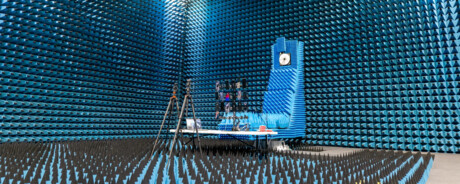
The Telecom Research Institute (TRI) at the University of Technology Sydney (UTS) was officially opened this week by Minister for Communications Anika Wells and Acting UTS Vice-Chancellor Professor Kylie Readman. Building on UTS’s Telecom Research Unit, the institute combines research, testing and training to make sure Australia is capable of understanding, testing and protecting its telecommunications networks now and into the future.
Telecommunications is recognised as critical national infrastructure, underpinning emergency services, health care, energy, transport, defence, finance and the digital economy. As networks become more complex and more essential, recent major outages have shown how much Australians depend on them working, especially in an emergency — with government reviews having recommended a comprehensive testing regime across networks and devices to ensure callers can reach Triple Zero.
The TRI goes some way to addressing this, serving as home to the National Telecom Resilience Centre (NTRC) — created through a partnership between the Australian Government, UTS and the Australian Telecommunications Alliance — and its Controlled Test Facility (CTF). The CTF is a purpose‑built testing environment where Telstra, Optus and TPG Telecom can work together to test emergency calling, thus improving our understanding of how networks, devices and fallback pathways perform during outages and other disruptions.
Each operator has installed its own equipment inside a fully anechoic chamber at the CTF, allowing researchers to safely recreate and study the kinds of rare but serious network failures that can prevent emergency calls from getting through. It is one of the first independent facilities in the world able to study emergency call failures at a system level and now supports testing obligations under Industry Code C674:2025, making Australia the first country to formalise cross-network emergency calling testing and research through an industry code.
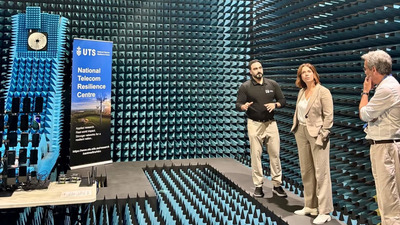
“The CTF strips the end-to-end network down to one question: does the call get through?” said Professor Ray Owen, Director of the NTRC and TRI. “Having all three networks in one chamber, with operators able to inject sovereign-function failures on cue, gives Australia an independent answer to that question.”
The research is already producing real safety outcomes. By recreating critical failure scenarios that are unsafe to study on live networks, UTS researchers identified specific handset behaviours that prevented emergency calls from completing but were invisible under standard testing. That evidence directly prompted engagement with device manufacturers and led to targeted software updates, including Apple’s iOS 26 release in late 2025 addressing iPhone 12 models.
“Apple was able to identify a vulnerability in some of its older devices and was able to push out software updates to people proactively — not reactively,” Wells stated. “That is the kind of important work that will continue to happen here, and it is why the Albanese government and the industry are backing UTS.”
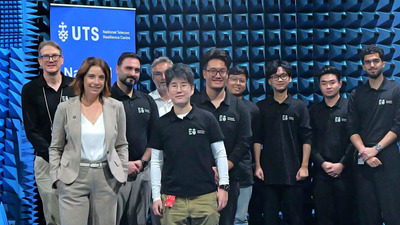
As well as identifying and fixing problems, Wells noted that the TRI is also future-facing, working on improving network resilience, emergency call coverage mapping, and the use of new technologies like LEO satellites for emergency communication. It will also play an integral role in deepening the skills of the engineers that are so important in making the telecommunications sector more resilient, she said.
“At the Telecom Research Institute, we’re tackling real network challenges and giving the next generation of domestic Australian engineers the chance to work on them,” Owen said. “Building that talent here is how we secure a stronger telecommunications future for Australia.”
In 2026, the NTRC secured a further $5.5 million in funding to expand its work, supporting research into outage recovery, Border Gateway Protocol (BGP) anomaly detection, power–telecommunications interdependencies, satellite‑enabled service continuity and advanced radio‑frequency prediction for emergency calling. The funding also supports the development of a fully independent, end‑to‑end testbed within the NTRC, enabling UTS researchers to validate new approaches to detecting, managing and recovering from major communications failures before they are deployed in live operational networks.
“Australians deserve access to reliable, high-quality and affordable telecommunications services, supported by a strong regulatory and consumer safeguards framework,” Wells concluded.
“Research facilities like this are important in addressing the challenges the telco sector faces, as well as developing the skills people need to make the sector better.”
Comms Connect Melbourne 2026: conference highlights
Comms Connect Melbourne 2026 brought together industry leaders to explore emerging technologies...
ARCIA update: Gala Dinner highlights
Attendance at both Comms Connect and the ARCIA Gala Dinner & Excellence Awards included...
Laurie Colvin: a lifetime pushing the boundaries of radio
Laurie Colvin's 50-plus years in the radio communications industry have been defined by...