Could AI help bond public safety agencies and communities?
Sir Robert Peel, founder of London’s Metropolitan Police Service in 1829, is widely considered the father of modern policing. Renowned for his pragmatic leadership and social reforms, Peel’s vision emphasised crime prevention and public cooperation, expressed in the foundational principle that “the police are the public and the public are the police”.
Building public trust remains as relevant today as ever, and in a new digital age, artificial intelligence can serve as the catalyst for deeper and more effective collaboration between communities and emergency services.
Transforming frontline decision-making and response
For some, using AI in public safety may conjure concerns about privacy or automated decision-making without human oversight. These concerns are understandable, but they should not prevent us from realising AI’s potential in emergency operations when deployed in purposeful, practical and clearly defined ways. By processing vast datasets, identifying hidden patterns and providing actionable insights under pressure, AI can empower emergency responders to make well-informed, timely decisions when every second counts.
Consider a complex emergency where a non-English speaker calls Triple Zero in distress. Historically, such scenarios presented significant risks of miscommunication and critical delays.
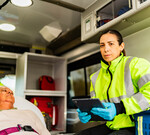
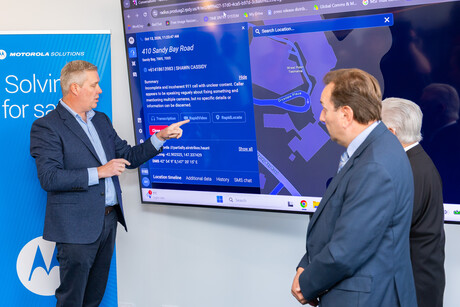
Today, AI tools can transcribe and translate emergency calls in real time, surfacing vital information — including addresses, medical histories and contact details — to assist call takers. Crucially, this technology does not replace human judgement; instead, it helps to remove logistical friction, leaving call takers to focus on offering reassurance, empathy and guidance.
Similarly, when a first responder arrives at a fast-moving incident, an AI-generated summary delivered to their mobile device can instantly digest initial calls, past incident histories and situational risk assessments. Equipping frontline personnel with concise, relevant information helps them safely navigate unfamiliar hazards and resolve incidents more efficiently.
This concept of assistive intelligence extends to urban video camera networks.
Humans don’t have the cognitive capacity to monitor multiple video streams, but with AI doing the heavy lifting, passive feeds can become proactive safety assets during active emergencies. For instance, if a child goes missing in a crowded precinct, AI analytics can rapidly scan video footage to identify visual descriptions, clothing and recent directions of travel, turning an exhaustive search into a targeted, intelligence-led operation.
Public support for AI-powered emergency management
Recently, in Hobart, Motorola Solutions celebrated the successful deployment of an online crime reporting portal for Crime Stoppers Tasmania.
Public support and engagement with the portal have been phenomenal. In 2025, 84% of all crime tips received across the state were made digitally, while Tasmania Police drew 35% of its collective intelligence directly from our portal.
The public’s willingness to share information with emergency services and adopt advanced technologies is highlighted in an independent research study Motorola Solutions commissioned in 2025. It found that 86% of Australians and New Zealanders feel comfortable sharing location data during emergencies, while 58% support using AI to detect critical keywords in calls, such as ‘knife’ or ‘collision’, to accelerate response times.
Balancing innovation with ethics
The potential for AI to bridge the gap between public safety agencies and communities is immense. By automating routine tasks and providing a clearer, more comprehensive picture of events, AI can free officers to engage in community-focused work that builds trust and helps to prevent crime.
However, the promise of AI must be balanced with ethical guardrails. This technology must be developed and deployed safely, thoughtfully and responsibly. This includes carefully vetting training data for bias, ensuring transparency and explainability of results, and establishing clear rules for human accountability.
The goal is not to create an infallible system, but one that amplifies human capabilities while remaining fair, just and worthy of public trust.
Realising AI’s potential in public safety is a significant opportunity requiring new levels of collaboration among technology providers, policymakers and community leaders. Open and honest conversations about AI’s risks and benefits, underpinned by a shared commitment to responsible development and deployment, are all essential.
In its best form, AI can be more than an efficiency tool; it can unite public safety agencies and communities to build a safer, more resilient future together.
Sir Robert Peel’s ambition to frame public safety as a shared responsibility remains just as vital and compelling today. While he could never have imagined AI, its responsible and ethical application, guided by steady policy frameworks, may be the key to fulfilling his vision.

From voice to video: the evolution of frontline communications
While voice remains essential, today's first responders also depend on computer-aided...
Modern station alerting reduces the toll on firefighters
A new generation of fire station alerting systems is improving communications reliability while...
Body cameras enhance safety at Dortmund Hospital
Following a rise in aggression towards healthcare workers, Dortmund Hospital equipped its...