
NTN for mission-critical communications
Monday, 16 March, 2026
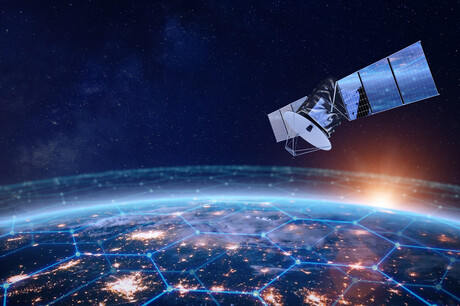
Currently used as backhaul for wide area networks, NTNs are set to evolve to direct-to-device solutions that will extend directly to users.
Non-terrestrial networks (NTNs) play a crucial role in mission-critical networks (MCNs) by providing reliable, resilient and ubiquitous connectivity that complements traditional ground-based networks.
Today, mission-critical systems use NTNs to provide backhaul for wide area networks or deployable network assets. As NTNs evolve, direct-to-device solutions will extend coverage to these users. This synergy between terrestrial and non-terrestrial networks ensures extensive coverage, enabling uninterrupted communication during emergencies, thus bolstering the effectiveness of mission-critical operations worldwide.
Different satellite systems have been used for many years to provide services such as TV broadcasting, navigation, communications, surveillance and weather forecasting. These satellites orbit Earth in three primary configurations: geostationary (GEO), medium earth orbit (MEO) and low earth orbit (LEO).
GEO satellites, positioned at an altitude of approximately 36,000 km, offer a wide field of view, making them ideal for satellite television broadcasting, business-to-business data services and government communications. However, their significant distance results in high latency and limited data rates. MEO satellites, typically orbiting at altitudes ranging from 8000 to 20,000 km, are primarily used for navigation systems like Galileo, GPS and GLONASS. Some MEO constellations also provide communication services, offering lower latency and higher data rates compared to GEO satellites.
LEO satellites, operating at altitudes ranging from 400 to 2000 km, provide the lowest latency and highest data rates compared to other satellites. Their smaller footprint necessitates larger constellations for global coverage. These satellites are well-suited for mobile broadband (MBB) and Internet of Things (IoT) applications.
3GPP has been actively working to integrate satellite communication into 5G NR, NB-IoT and LTE-M standards. Integrating NTN into 3GPP technology allows chipset and device vendors to target mass-market solutions by ensuring standardisation across terrestrial and non-terrestrial networks. This promotes economies of scale, lowering costs and accelerating development, while enabling widespread adoption of NTN-compliant devices across diverse markets.
MCNs defined
MCN systems are essential for the operation and safety of critical services, where any failure or delay can lead to serious and potentially catastrophic consequences. These communications are integral to sectors like defence, emergency services (police, fire and ambulance), utilities, railways and digital airspace.
Many government authorities are modernising their existing mobile communication networks, many of which are based on legacy narrowband technologies. The mission-critical market is now witnessing a widespread adoption of open 3GPP standards and rich, multivendor ecosystems. This facilitates the interoperability of communications, enhances cross-agency collaboration and unlocks important intelligence through secure and reliable networks.
Non-terrestrial networks (NTNs) play a pivotal role in MCNs across sectors like public protection and disaster relief (PPDR), critical infrastructure, defence, and government agencies. As data-driven operations expand, NTNs offer resilient, scalable and reliable connectivity by complementing terrestrial networks. They ensure seamless communication in remote, underserved or disaster-affected areas, enhancing operational efficiency and supporting modern communication infrastructures.
The key benefits of 3GPP-based NTNs for MCN users are:
- Extending coverage: NTNs expand network coverage where traditional infrastructure is unavailable or compromised.
- Facilitating ubiquitous connectivity: NTNs play a critical role in achieving ubiquitous connectivity by ensuring seamless transitions between terrestrial and non-terrestrial networks.
- Unified access and seamless service continuity: 3GPP 5G NTNs empower the development of unified devices capable of operating seamlessly across terrestrial and non-terrestrial networks, eliminating the need for separate hardware systems.
- Critical interoperability for mission-critical situations: Interoperability is at the heart of NTNs’ functionality, allowing various agencies to communicate and collaborate effortlessly across network and organisational boundaries.
The NTN market
The global NTN market is experiencing significant growth, driven by advancements in satellite technology and the rising demand for ubiquitous connectivity. Various market analyses indicate that the 5G NTN market is projected to be US$20–30 billion by 2030, reflecting a compound annual growth rate (CAGR) of 20.4%. The government, defence and public safety sectors are expected to account for a substantial portion, with estimates indicating they will make up over 35% of the total market by 2030.
This growth is further supported by government initiatives in collaboration with satellite operators to modernise communication infrastructures.
Requirements and challenges for NTN mission-critical networks
In addition to offering numerous opportunities, 3GPP 5G NTNs introduce unique requirements and challenges in meeting the strict demands of mission-critical users.
There are a number of key technical and operational challenges that 5G NTNs face in addressing the needs of mission-critical environments.
Coverage availability and performance
Coverage is influenced by several factors, including the number and position of satellites in orbit, the accuracy of antenna pointing, the frequency bands used, and physical obstacles like tall buildings or geographic features such as valleys. Effective communication networks must be designed to ensure wide and consistent coverage, even in areas with potential signal obstructions. Uninterrupted and stable coverage across all areas of operation is essential for an effective MCN.
These networks can still face challenges such as congestion-related slowdowns, which can impact their reliability and effectiveness, as well as restricted indoor coverage, which is yet to be analysed. To enhance connectivity in indoor environments, complementary technologies, such as hybrid terrestrial–satellite solutions or repeaters might be required.
Interference risks might also arise when terrestrial and satellite systems share the same spectrum. Careful spectrum management and coordination remain essential to ensure seamless coexistence.
Security
Transmission of sensitive and potentially classified information is a fundamental aspect of MCNs. Ensuring the security of these communications is paramount to protect against unauthorised access and potential cyberthreats, and requires robust encryption and secure transmission protocols to maintain the confidentiality, integrity and availability of the information being exchanged. Satellite beams often cover areas beyond national borders, increasing the risk of unintended signal capture by foreign monitoring stations.
An illustrative example is the European IRIS2 Satellite Constellation, which emphasises improved security by utilising quantum cryptography through the European Quantum Communication Infrastructure (EuroQCI) initiative and enhancing cybersecurity through a secure-by-design approach.
Bandwidth and latency
Beyond basic voice communications, mission-critical scenarios demand capabilities such as live video feeds, data transfer and real-time coordination. The bandwidth must be sufficient to support these data-intensive applications, while latency needs to be minimised to ensure real-time communication.
Latency is also a key factor in an NTN and is influenced by multiple factors, including propagation delay, transmission delay, processing time, queuing and other network-related delays. LEO systems typically offer latencies in the tens of milliseconds, while GEO systems experience latencies of several hundred milliseconds. The performance also remains heavily dependent on the capabilities of the satellite antenna.
Interoperability
Seamless communication across various agencies, departments and segments (air, sea, land) is essential in mission-critical situations to enhance coordination and efficiency. Interoperability ensures that different systems can work together, allowing federal, state and local agencies to communicate effectively without technical barriers. This capability is vital to avoid duplication of efforts, reduce response times and improve overall coordination during emergencies.
Developing and implementing 3GPP communication standards and protocols for NTN is essential for enabling seamless interoperability between terrestrial and non-terrestrial networks.
Ecosystem availability and mobility
The environments in which mission-critical actors operate are often unpredictable and demanding. This requires communication equipment to be highly durable and capable of withstanding extreme conditions such as temperature fluctuations, moisture, dust and physical shocks — and the mobility of the equipment is also crucial.
Cost
The financial aspect of implementing and maintaining MCN systems is a significant consideration. It involves evaluating the initial capital expenditure and the ongoing operational costs. These costs include not only the equipment but also airtime fees, maintenance, training for users and technical support. Effective budgeting must account for the total cost of ownership over the equipment’s lifecycle to ensure sustainability and continuous operational capability without unexpected financial strain.
Lastly, it is important to highlight mission-critical feature parity. Achieving feature parity between terrestrial and satellite networks is crucial. Mission-critical applications such as push-to-talk, push-to-video, mission-critical data and QPP (quality of service, priority and pre-emption) must perform reliably across NTNs without compromising the capabilities available in terrestrial networks.
Conclusion
NTNs are set to play a crucial role in the future of MCNs by providing reliable, resilient and ubiquitous connectivity, seamlessly complementing traditional ground-based networks. They deliver uninterrupted communication in remote, hostile or infrastructure-limited environments, enabling real-time situational awareness, enhanced operational efficiency and robust disaster response.
However, to fully harness their potential, further improvements are necessary for seamless integration with terrestrial networks, enhanced spectrum utilisation and ecosystem readiness. 5G has initiated the process of integrating NTNs with TNs, aiming to provide comprehensive coverage for users. As NTNs evolve, they will be a vital component of 6G standards.
Multisite DMR system strengthens comms for mining group
Caltta Technologies has announced the successful deployment of a multisite DMR Enhanced...
Private network upgrade for industrial campus
Inrico delivered an end-to-end converged communication solution to support Yihai Kerry's...
Wireless telemetry enables smarter mine water monitoring
Omniflex has deployed a wireless telemetry system at the Nkomati Nickel mine to monitor water...