
How the right antenna can deliver critical insights into wastewater
By Robert Jesman, Commercial Director at Panorama Antennas
Wednesday, 02 September, 2026
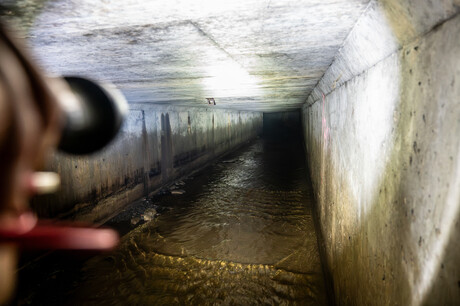
Wastewater monitoring gives utility providers the opportunity to optimise their systems, reduce maintenance costs, and locate and solve potential problems ahead of time, but it’s only possible with the right antenna solution.
Thanks to modern IoT technology, wastewater monitoring can offer valuable real-time insights into issues such as water levels, pipe blockages and maintenance factors, with continuous and resilient connectivity via a high-performing antenna a non-negotiable for utility networks looking to analyse and enhance their systems.
Without accurate and consistent data collection and communications, utility networks risk undetected failures, costly disruptions and public health hazards, making wastewater monitoring a critical aspect of the industry.
What is wastewater?
Put simply, wastewater is any water that has been used by humans, before it’s treated and returned to the environment.
Households produce domestic wastewater from sources like toilets, showers and kitchens, while industrial wastewater comes from a range of industry sources including manufacturing businesses and food processing plants.
Once collected, wastewater is transported via expansive underground sewer networks to treatment plants where contaminants are removed so it can be safely returned to the environment.
In 2021, the UN World Water Development Report estimated that more than 380 billion cubic metres of wastewater are recovered as water every year, with this figure set to rise to 470 billion cubic metres by 2030 and to 574 billion by 2050.
With roughly one trillion litres of wastewater recovered every day and rising, it’s a significant industry for both our environment and the world economy.
Why is wastewater important?
The impacts that wastewater-related incidents can have on our environment, public health and economy are wide ranging and significant.
If allowed to run directly into waterways, wastewater can pollute rivers, lakes and oceans, harming ecosystems and water quality, while failures in wastewater systems can lead to major flooding events for homes and businesses.
At a public health level, untreated wastewater can also have major impacts on our society. Wastewater can contain harmful pathogens and contaminants that can spread viruses and bacteria if it is not treated properly.
Alongside the environmental impact, wastewater overspills present considerable financial and reputational risks for utility networks, exposing operators to substantial regulatory fines while potentially damaging brand reputation, public trust and stakeholder confidence.
How is wastewater monitored?
As a resource with the ability to have significant impacts on our world, wastewater monitoring is critical.
Thanks to wireless IoT solutions, utility networks can now monitor a range of data to optimise their functions and predict and solve challenges in advance.
By deploying connected sensors throughout sewer networks, utility providers track operational and environmental conditions remotely and in real time, optimising processes and spotting problems before they become major issues.
Manhole sensors track the flow of water in gravity pipes, detecting blockages and abnormal conditions, while also allowing providers to measure key indicators such as vibration, temperature and usage to predict future maintenance requirements.
In the lift stations that pump water uphill through pipes, sensors monitor water levels, pump status, flow and pressure, further optimising processes, mitigating flood risks, and reducing maintenance visits and operational costs.
These sensors also enable the function of the system, whether it be signalling for a pump to turn on when water reaches a desired level or triggering an alarm when levels fall outside operating limits.
The role of the antenna
All of this data can provide valuable, practical information for utility providers and the public, but without strong, reliable and continuous connectivity between sensors and monitoring systems, the value of these insights is severely limited.
This is where the role of a high-performing and durable antenna becomes paramount.
Antennas operating in wastewater monitoring scenarios face a range of connectivity hurdles, including difficult and remote installation locations such as metal enclosures or underground reinforced concrete structures.
Unsurprisingly, their ability to operate in wet or submerged conditions is also key, with all of these factors meaning antennas that can perform in difficult deployments over long periods of time are a must-have for utility providers.
Solutions
At Panorama Antennas, we understand the demanding nature of wastewater monitoring and design and manufacture antennas to provide high-performing, resilient and long-lasting solutions for utility networks.
Our range of IP68-certified antennas is designed specifically for wastewater applications and have faced stringent tests to ensure their suitability for the industry. Regarded as the industry benchmark for protecting against water ingress, IP68 requires protection against at least one metre of water submersion for at least 30 minutes, with the exact depth and duration determined by the manufacturer.
Our LPBSC-6-60 and B4BSC-6-60 omnidirectional antennas have been tested well beyond these minimum requirements, with both certified to remain fully functional in five metres of submersion for seven days.
The range has also survived Severe Wastewater Analysis Testing (SWAT) to ASTM-G210, which simulates the hostile environments the antennas can face when deployed. The antennas are exposed to contaminants and hazards such as sewer gases, sulfuric acid, high temperatures and humidity over a 28-day period, with the adverse conditions amplified to simulate long-term impacts.
Designed to be installed either above or below ground, an anti-rodent sleeve can also be added to ensure they remain functional in the face of vermin damage.
Wastewater monitoring is an important opportunity for the utility industry to optimise processes, solve problems and predict issues ahead of time. However, none of this important data collection is possible without the right antenna solution.

Comms Connect preview: connecting the NHS
Modern healthcare delivery depends on reliable and secure connectivity, yet many of the UK's...
Essential cathodic protection with web-based monitoring
Omniflex has been aiding local authorities in Queensland with the essential maintenance of...
How thousands of tiny dots could save first responders' lives
The goal of the First Responder Smart Tracking (FRST) Challenge was to create prototype devices...