
Acoustic sensing used for drone detection
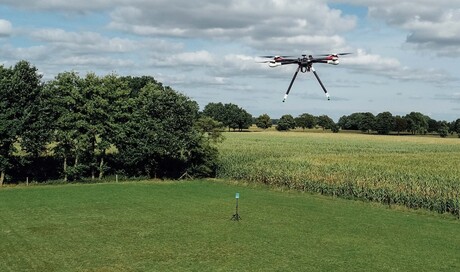
Drones can pose a security risk to airports, critical infrastructure, military facilities and large-scale events; however, they are difficult to detect when they fly beyond visual line of sight. German researchers have now developed an intelligent acoustic sensor solution that detects and localises drones based on their characteristic sound patterns, even without visual contact.
When an unmanned aerial vehicle approaches a sensitive area, every second counts. Security personnel need to determine as early as possible whether a drone is approaching, where it is located, and how the situation is developing. Conventional detection methods provide important information, but they are not equally reliable in every environment: lines of sight may be obstructed and radio signals may be disrupted.
Acoustic sensing offers an additional detection channel. As a complementary component used together with radar, cameras and LiDAR, it can make existing security systems more robust and provide indications where optical or radio-based methods reach their limits.
The new methodology sees researchers at the Fraunhofer Institute for Digital Media Technology IDMT’s Oldenburg Branch for Hearing, Speech and Audio Technology HSA analyse the acoustic signals emitted by drones. Each drone produces a characteristic sound pattern — an acoustic fingerprint. Machine learning algorithms identify these patterns even in complex, noisy environments. Signals from multiple microphones can also be used to determine the direction from which the flying object is approaching. This allows drones not only to be detected, but also to be localised and spatially positioned.
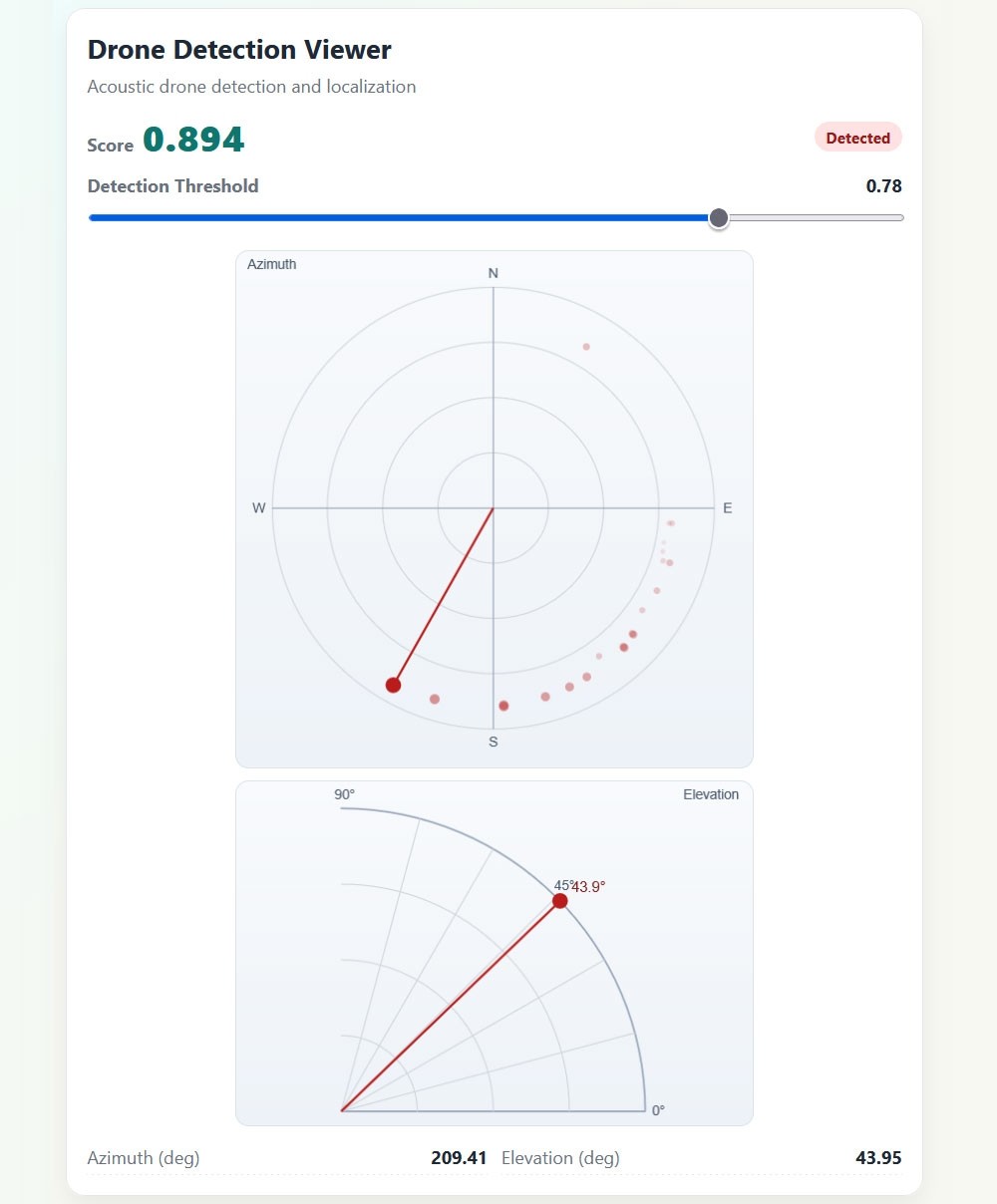
“With our acoustic technology, we offer a cost-effective, low-maintenance complement to existing drone detection systems,” said Christian Rollwage, Group Manager of Audio Signal Enhancement at Fraunhofer IDMT in Oldenburg. “Especially in built-up or forested areas, acoustics can provide decisive added value because it can detect drones even when they are not yet visible to other sensors.”
While radar and camera systems may involve high costs and require substantial computing power, acoustic sensing offers a particular advantage through its low energy demand: it passively receives sound emissions and vibrations from the environment without actively transmitting signals itself and thus remaining undetectable. The technology can be deployed across large areas and operated autonomously. It is also suitable as a ‘wake-up’ component that activates additional sensors only when an acoustic indication of a drone is present.
The development is based on many years of research at the Oldenburg site, with Fraunhofer IDMT having advanced the acoustic detection and localisation of drones since 2016. In the future, this technology could also be applied to other acoustic events, such as vehicles or gunshots.
Automating satellite back-up for submarine cable networks
The European Space Agency has funded a project to detect submarine cable interruptions and switch...
Savox Communications launches next-gen military comms system
Savox MissionCore is an open and interoperable mission platform designed to transform fragmented...
Smartphone microphones used for disaster search and rescue
The method is effective for locating victims buried under debris or soil caused by earthquakes or...