
AI is hitting a frontline reality check in Australia: report
As Australian organisations accelerate the adoption of AI-enabled and mobile-driven workflows, research from SOTI, suggests many frontline environments may not yet be resilient enough to support the next wave of automation without added operational risk. This comes as Australia’s labour productivity growth remains under sustained pressure, increasing reliance on technology to deliver efficiency gains without expanding headcount.
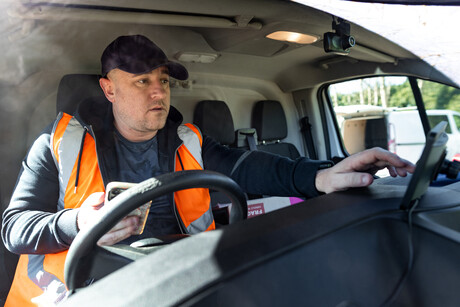
Findings from, The SOTI AI Brief: Unlocking a Transformative Force, reveal that global frontline workers across sectors such as healthcare, transportation and logistics (T&L), and emergency services are already losing significant time each month due to mobile device downtime, connectivity issues and manual workarounds. These challenges are contributing to increased stress, reduced productivity and, in some cases, unsafe behaviours as workers attempt to make up lost time.
While AI is increasingly being positioned to improve efficiency and decision-making, the research highlights a growing gap between rising expectations and the stability of frontline mobility environments required to support them. Despite growing investment in automation, 58% of organisations in distributed workforce environments still rely on manual processes such as email and paper, underscoring how uneven readiness remains on the frontline. This aligns with broader industry analysis, showing that many AI initiatives stall not because of algorithmic limitations, but because the underlying systems and workflows they depend on remain unstable or poorly governed.
“For frontline work in Australia, mobile technology is fundamental,” said Michael Dyson, VP of Sales, APAC at SOTI. “But what the data shows is that many organisations are layering new AI-driven capabilities onto mobility foundations that are already under strain. Without stability and visibility, AI can amplify problems rather than solve them.”
Recent high-profile network outages in Australia have further emphasised how dependent frontline operations have become on mobile connectivity. These events exposed limited fallback options, poor visibility into device health and an over-reliance on manual intervention when systems fail. This challenge is reflected in SOTI’s research, which shows that while 74% of global organisations in distributed workforce can track devices, far fewer do so with real-time or predictive insight.
While such instances are uncommon, they act as a real-world stress test for many organisations. In Australia, workplace regulators have increasingly highlighted time pressure, fatigue and distraction as contributors to safety incidents, reinforcing the risk of technology-related disruptions in safety-critical frontline roles.
According to the report, global frontline workers in T&L estimate losing around 13 hours per month due to device-related downtime, while 64% of emergency service workers say technical issues add stress to their jobs. In healthcare, device fragmentation and legacy systems continue to limit responsiveness, even as digital tools become more embedded in-patient care workflows.
These findings are particularly relevant to Australia, where labour shortages across healthcare, T&L and emergency services leave little margin for disruption. As organisations expect frontline teams to do more with fewer resources, technology that introduces friction rather than resilience is increasingly unsustainable.
“AI raises expectations around speed, insight and automation, but frontline operations still depend on basics like battery health, reliable connectivity and working peripherals,” Dyson said. “If those fundamentals aren’t addressed, organisations risk widening the gap between what technology promises and what frontline teams can realistically deliver.”
SOTI’s research also points to uneven progress in governance and predictive capabilities. While many organisations are investing in automation, only 34% have increased spending on mobile security, leaving device management largely reactive and issues such as battery degradation, software conflicts and printer connectivity addressed only after they disrupt operations.
The report highlights the importance of shifting from reactive troubleshooting to predictive maintenance and real-time visibility across device fleets. For Australian organisations, this approach is critical not only for productivity, but for meeting safety obligations, protecting workforce wellbeing and maintaining service continuity in mobile-dependent environments.
“Mobility has become a frontline issue, not just an IT one,” Dyson said. “Organisations that focus on strengthening the foundations of mobility now will be far better positioned to adopt AI responsibly and support their frontline teams as operational demands continue to grow.”
$26m agreement to arm Polish counter-drone defences
The inertial systems will allow C-UAS stations to accurately detect, track and engage air threats...
Intelematics connects one millionth vehicle to emergency call platform
Australian company Intelematics says that connecting the one millionth vehicle to eCall platform...
Ericsson to bring private 5G to Queensland's rail network
Ericsson 5G technology has been selected for the first stage of Queensland's next rail...