CSIRO testing quantum entanglement to secure GNSS timing
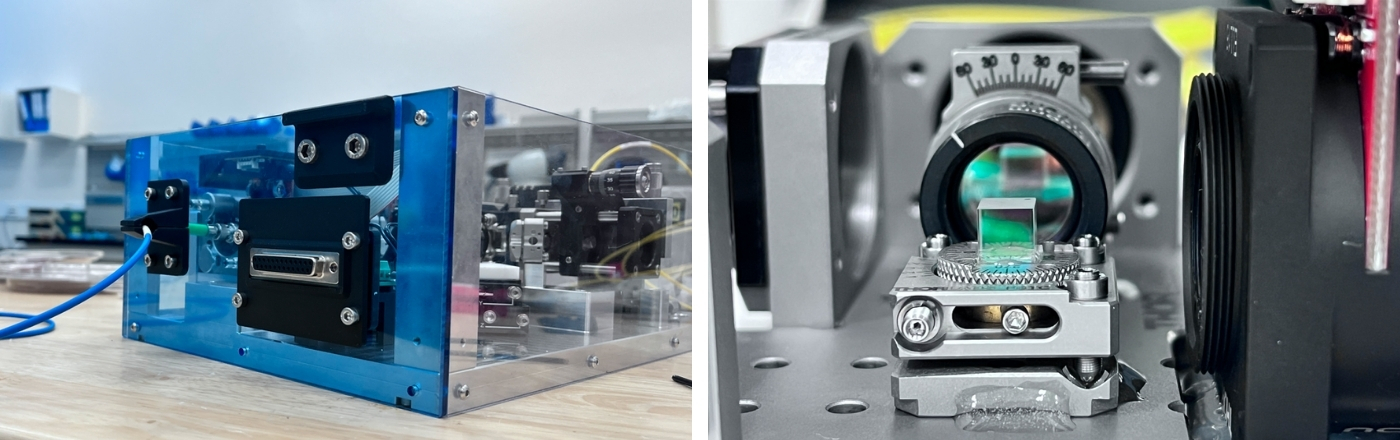
CSIRO has announced the development of portable quantum-enabled timing devices designed to help maintain secure timing for critical systems when GNSS signals are disrupted.
GNSS satellites carry atomic clocks to transmit timestamped signals to receivers on Earth. The Global Positioning System (GPS) is the best-known GNSS in Australia and the United States, but it is only one of several systems used globally.
When working seamlessly, these signals underpin navigation and keep critical networks running. Unfortunately, they’re increasingly becoming targets for those with malicious intent.
Jamming and spoofing are two ways GNSS signals can be disrupted. Jamming blocks weak satellite signals so they can’t be received, while spoofing is more sophisticated, sending a false but convincing signal that tricks a receiver into accepting the wrong location or time. Both are of increasing concern because GNSS signals are weak and therefore more susceptible to interference by the time they reach Earth.
Though they are illegal in Australia and many other countries, jamming devices are still accessed through illicit channels. Sophisticated spoofing capability is generally harder to obtain and use effectively, but the risk is growing as software-defined radio, open-source tools and technical know-how become more accessible.
GNSS interference is no longer a remote or theoretical risk — it is occurring globally. In contested environments, GNSS signals are being disrupted as an act of war, causing vital systems to fail. The result can be catastrophic when operations taking place across air, land, sea, cyber and space lose communication.
CSIRO researchers are helping tackle this challenge through a Defence Science and Technology Group-led quantum project designed to enhance secure timing technologies for the Australian Defence Force.
To do this, it has developed two high-flux, portable and easily deployable entangled photon sources. Called the CSIRO Quantum Light Source, these devices generate tiny photons that are linked through the laws of quantum physics. Initially collaborating with Heriot Watt University, the CSIRO team set out to bring their Scottish counterparts’ source design thinking out of the lab and into the field.
Using quantum entanglement, two tiny photon particles become linked so closely that a change to one is instantly reflected in the other, even when they are far apart. While one photon stays on Earth, its entangled partner is sent to an orbiting satellite hundreds of kilometres away. Despite the distances involved, the photons remain quantum entangled and a secure communication link can be established.

Quantum entanglement is particularly useful for solving problems of ground-to-satellite time transfer because it is extremely sensitive to interference. So, if someone tries to intercept or tamper with the signal, the quantum state changes and the disruption can be detected instantly — enabling the user to switch to a different channel. Known as entanglement distribution, this process can be done continuously to ensure a secure link and is what makes CSIRO’s Quantum Light Source spoof-proof.
While this project is being developed with defence in mind, the need is not limited to defence applications. The same secure and resilient timing that helps military systems operate when GNSS is disrupted also protects the civilian systems we rely on every day, including communications networks, critical infrastructure, transport, power grids and financial services.
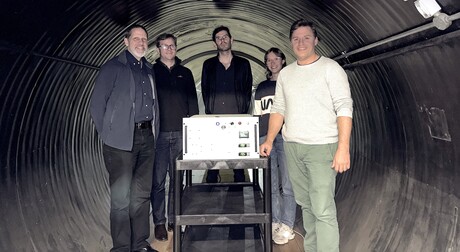
“This work is a significant milestone in the development of quantum-secure time transfer in Australia,” said CSIRO Technical Lead Dr Matt Broome. “With this work, CSIRO has developed specialised capability, which puts Australia on the path to a more resilient future in global positioning technology.”
For Australia, the project shows how deep research expertise can be translated into practical capability. By developing key quantum components here, CSIRO is helping build sovereign know-how in an area that is likely to shape the future of secure communications, navigation and timing.
RFI acquires McKinstry's In-Building Wireless Division
RFI Technology Solutions has acquired McKinstry's In-Building Wireless Division, bringing an...
Comms Connect workshop explores latest spectrum developments
Join industry experts Andrew May and Simon Palmer at Comms Connect Melbourne as they seek to...
Nearly 17,000 active satellites are now in orbit
With 4737 satellites launched over the past 12 months, the deployment of new orbital...