One network, one device: how MCPTx is replacing the two-radio problem
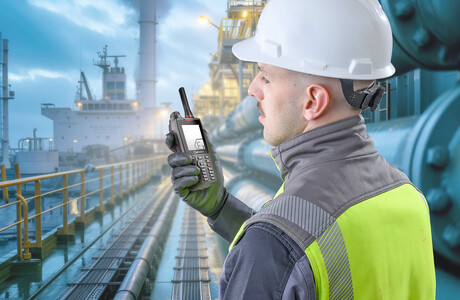
For decades, workers in hazardous industrial environments have carried two communication devices: a VHF or UHF radio for site communications, and a mobile phone for everything else. That duplication carries a cost: separate infrastructure, separate maintenance contracts, separate training programmes and separate failure points. The IS380.1 from i.safe MOBILE addresses this directly.
Certified for Zone 1 and Zone 21 and soon coal mining
The IS380.1 carries ATEX and IECEx certification for Zone 1 and Zone 21 hazardous areas. This means it is approved for use where explosive gas or combustible dust atmospheres are present during normal operation. The IS380.M1, a dedicated mining version of the device designed specifically for underground and surface mining applications, will be available soon.
Target sectors include utilities infrastructure, water treatment plants, mining operations, chemical processing facilities and defence logistics depots.
The device runs ISM-OS 16, i.safe MOBILE’s own operating system based on Android. It supports 2G, 3G and 4G networks and is rated to IP68 and MIL-STD 810H. The hardware is purpose-built for shift work in demanding environments, not a consumer device with a protective case.
3GPP-compliant MCPTx communication
The IS380.1 supports MCPTx communication compliant with the 3GPP standard — the internationally recognised framework for mission-critical voice, video and data over LTE and 5G. Unlike commercial PTT-over-cellular solutions, 3GPP-compliant MCPTx delivers network-level prioritisation, dedicated emergency channels, end-to-end encryption and full dispatch functionality. This ensures the IS380.1 meets the requirements of organisations where communication failure is not an option: emergency services, utilities, defence and industrial facilities in hazardous areas. The device is also future-ready, with a clear migration path from LTE to 5G as network infrastructure evolves.
MCPTx versus VHF: what changes in practice
Mission Critical Push-to-Talk (MCPTx) over LTE delivers capabilities that conventional VHF simply cannot match. Group calls, individual calls, dispatcher interfaces and priority queuing all operate over a single broadband bearer. Coverage extends wherever 4G is available, rather than being constrained by the reach of a licensed repeater network.
For organisations that manage their own PMR infrastructure, the operational savings are significant. A single cellular PTT network replaces two parallel systems. Spectrum licensing, repeater maintenance and radio programming cycles can be reduced or eliminated. IT and comms teams manage one platform rather than two.
Organisations that are not ready for a full cutover have a practical migration path. The IS380.1 connects to third-party radio-over-IP gateways, allowing LTE users and legacy VHF users to speak on the same channel. Field teams on the IS380.1 communicate directly with colleagues still using conventional radios. The transition happens at the organisation’s pace, without forcing simultaneous fleet replacement.
The connected worker in critical industries
Modern workforce management increasingly depends on data, not just voice. Lone worker protection, GPS tracking, digital permits to work, and real-time asset management all require a device that can run applications, not just transmit audio.
The IS380.1 ships with the i.safe MOBILE App World pre-installed. This curated application platform, hosted on German servers, provides access to validated software tested against the actual device hardware. PTT applications, lone worker protection, mobile device management and maintenance tools are available through a single controlled environment. Broadband PTT solutions built on this platform support features that go well beyond voice: video streaming from the field, image capture for incident reporting and integration with control room software all become possible on the same device the worker already carries.
Familiar to anyone who has held a radio
Radio engineers and comms managers know that the biggest resistance to any new device comes from the field. Workers who rely on communication in safety-critical situations do not welcome change for its own sake.
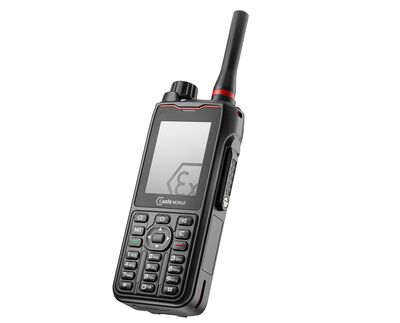
The IS380.1 is designed around this reality. The large side-mounted PTT button sits exactly where a radio user expects it. A programmable rotary switch handles channel selection or volume without looking at the screen. The front-facing amplified loudspeaker performs in high-noise environments. A 13-pin ISM interface maintains full compatibility with existing professional headsets. The replaceable battery supports continuous operation across long shifts without returning to a charging station.
The IS380.1 will be available through i.safe MOBILE’s global distribution network, including the Australian subsidiary. Full technical specifications and supported PTT applications are at www.isafe-mobile.com.
Hytera Introduces PDC580 Dual-Mode Rugged Radio to Support Seamless Communication Across Critical Operations
Hytera has announced the launch of the PDC580 Dual-Mode Rugged Radio, developed for organizations...
From emergency vehicle to mobile command centre
Why connectivity is the backbone of modern emergency fleets.
Hytera DIB-R6 SMART TETRA Base Station
Safer, wider, greener — your mission, always connected